
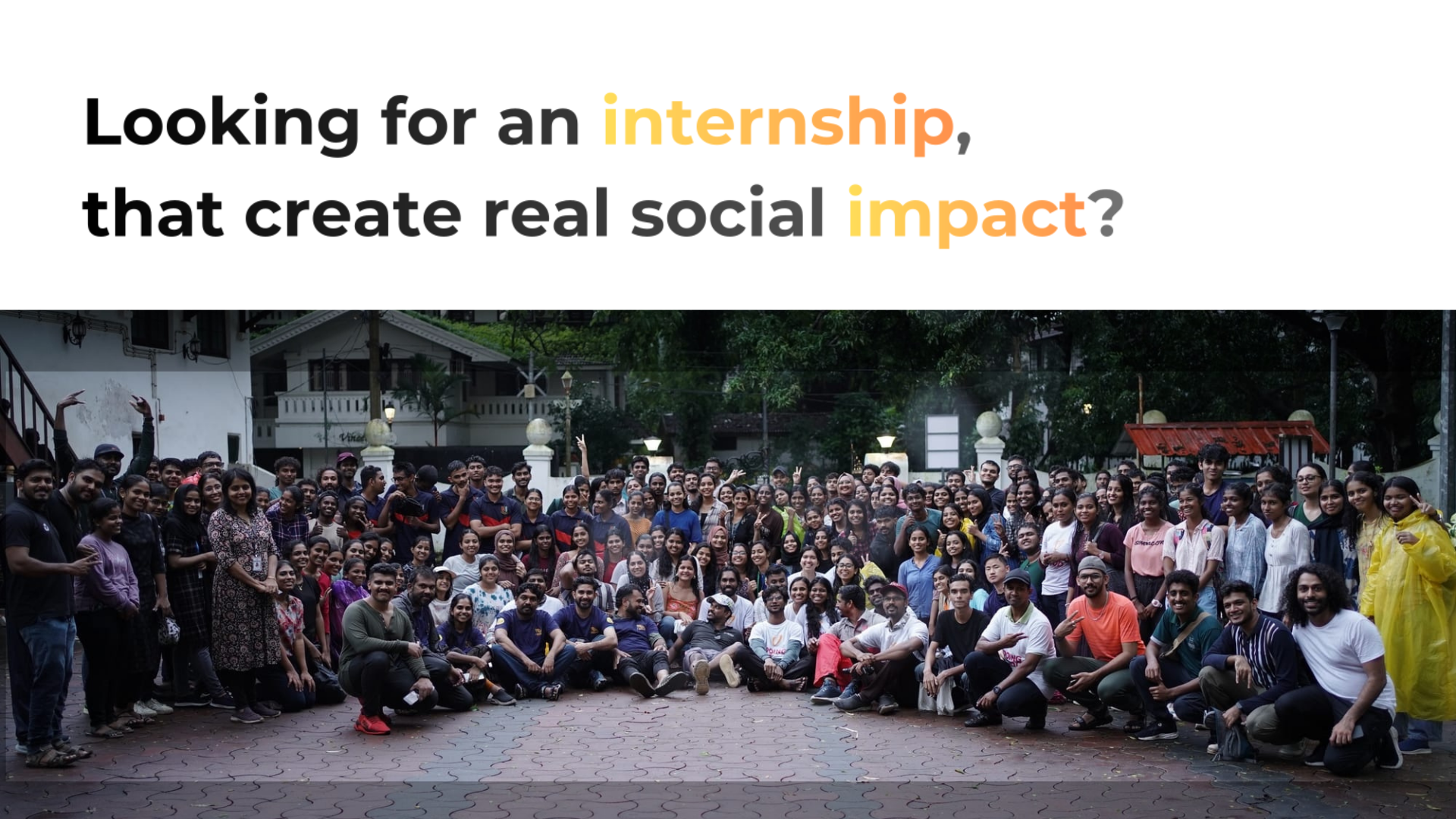
The Social Internship Program by Captains Social Foundation is a structured, practice-based community engagement leadership programme designed to fulfill academic internship requirements while enabling students to develop real-world social impact skills.
Unlike typical internships that focus primarily on observation or routine assistance, this programme ensures that students actively engage with communities, identify real problems, design practical solutions, implement structured initiatives, and reflect meaningfully on their learning journey. The programme is aligned with academic requirements across Social Work, Humanities, Management, and allied disciplines, ensuring that students meet university standards while gaining practical exposure.
The programme supports institutions in strengthening experiential learning and outcome-based education frameworks, aligned with the National Education Policy (NEP) 2020’s emphasis on skill-based education, community engagement, and holistic student development.
Objectives
The internship is designed to bridge the gap between classroom learning and field practice. Its key objectives are to:
1) Fulfill university-mandated fieldwork requirements
2) Provide structured field exposure
3) Develop leadership and civic responsibility
4) Enhance research, planning, and implementation skills
5) Enable students to build a measurable social impact portfolio
The internship transforms students from passive observers into active implementers who take ownership of community initiatives.
Duration & Structure
The duration of the internship shall be based on the student’s academic requirement and internship fee will be ₹2500. The programme is flexible in design and may be undertaken in community-based, office-based, hybrid, online, or offline modes, depending on institutional and student requirements.
Office-based internship opportunities are available at our centres in Kochi and Kollam for students who prefer or require structured field exposure through the organisation. Students are not required to remain at the office full-time. They are encouraged to undertake their projects within their own communities under structured mentorship and guidance from the organisation.
Internship Methodology
The internship follows a workbook-based, step-by-step leadership framework that ensures systematic learning and impact.
- Phase 1 (Choose): Students identify a community and recognise a relevant issue that requires intervention.
- Phase 2 (Understand): Students conduct field visits, engage with stakeholders, study root causes, and carry out surveys or informal assessments to understand the issue deeply.
- Phase 3 (Plan): Students develop a structured action plan by defining objectives, allocating resources, identifying stakeholders, and preparing an implementation timeline.
- Phase 4 (Act): Students implement a small-scale community initiative, mobilize support where required, and monitor progress.
- Phase 5 (Reflect): Students document outcomes, analyse their learning, evaluate impact, and prepare structured reports.
This model ensures that the internship results in meaningful social impact rather than surface-level engagement.
Academic Alignment
The internship is aligned with common academic fieldwork components, including:
- Field visits
- Community interaction
- Individual case work
- Group work
- Needs assessment
- Survey documentation
- Project implementation
- Activity reporting
Students receive structured guidance to ensure their documentation meets academic submission standards.
Internship Benefits
The internship is designed to provide students with structured guidance, practical tools, mentorship, and extended opportunities that enhance both their academic experience and professional growth. Throughout the internship, students receive the following support and benefits:
- Structured Internship Workbook: Each intern receives a comprehensive workbook that provides step-by-step guidance throughout the entire internship process, from identifying a community issue to planning, implementing, and documenting their project.
- Dedicated Personal Mentor: A mentor is assigned to every intern to provide continuous one-on-one personalised mentorship, guidance, progress review, constructive feedback, and support in decision-making throughout the internship period.
- Social Opportunities: Interns receive regular updates about volunteering, internship, fellowships and leadership programmes offered by national, international, and UN-related organisations.
- Networking Opportunities: Interns are added to the Captains Volunteer Network, gaining access to structured volunteering and leadership development programmes. Students connect with youth volunteers across Kerala and India, thereby expanding their professional and social networks.
- Resources: Interns receive access to structured planning templates, toolkits, and practical resources to organize activities effectively. These resources remain accessible even beyond the internship period to support future initiatives.
- Volunteer ID Card: Interns are issued an official ID card for authentication during field visits and community engagement activities, ensuring credibility and formal representation of the organisation.
- Volunteer T-Shirt: A Volunteer T-shirt is provided to be worn on the main day of organizing the activity, enabling interns to represent themselves and the organisation professionally during community engagement.
- Certification: Upon successful completion of the internship, students will be awarded an Internship Completion Certificate. Based on engagement and contribution, interns may earn recognition badges and awards. Outstanding work may also be featured on the organisation’s blog, social media platforms, and website.
Impact on Students
This internship significantly strengthens a student’s academic and professional profile by combining structured learning with practical implementation.
- Resume Building: Students gain demonstrable experience in project ownership, initiative-taking, community engagement, event management, research documentation, and leadership execution. Instead of simply stating “Internship Completed,” students can showcase measurable impact and successfully implemented initiatives.
- Job Readiness: Students develop essential professional competencies such as communication skills, stakeholder engagement, problem-solving, decision-making, and structured planning. These competencies are highly valued in NGOs, the development sector, CSR roles, corporate leadership pathways, government programmes, and fellowship applications.
- Skill Development: The internship builds confidence, public speaking ability, critical thinking, empathy, civic responsibility, and an entrepreneurial mindset. Students transition from dependency-driven learning to initiative-driven action, positioning themselves as proactive and socially responsible professionals.
Why Students Should Join
The Social Internship Program is more than a mandatory academic requirement; it is a structured platform for students to build leadership capacity, develop 21st-century skills, and create meaningful social impact. This internship enables students to:
- Develop 21st-Century Skills: Students build essential skills such as critical thinking, problem-solving, communication, collaboration, leadership, adaptability, and decision-making. These competencies are highly valued across both the social and corporate sectors.
- Address the UN Sustainable Development Goals: Through community-based initiatives, students contribute toward solving real-world challenges aligned with the United Nations Sustainable Development Goals. This strengthens their understanding of global development frameworks while acting locally.
- Build a Strong Social & Professional Profile: Instead of simply completing fieldwork hours, students design and implement a measurable community initiative. This allows them to build a strong social impact portfolio that can be highlighted in resumes, LinkedIn profiles, fellowship applications, and interviews.
- Gain Practical Leadership Experience: Students take ownership of a project from idea to execution. This develops confidence, accountability, and the ability to manage stakeholders and resources effectively.
- Strengthen Career Pathways in the Social Sector: The internship prepares students for careers in NGOs, CSR roles, development organisations, policy research, government programmes, and social entrepreneurship. It also supports applications for fellowships and higher education programmes in social development.
- Create Long-Term Impact Beyond the Internship: Students become part of a larger volunteer network, gaining continued access to leadership opportunities, mentorship, and national and international engagement platforms.
Way Forward
We welcome collaboration with colleges and universities to provide structured academic internship opportunities and leadership programmes that support students in their personal, leadership, and professional growth. We are flexible in customizing our internship framework to align with university guidelines, academic structures, and departmental requirements.
We look forward to partnering with your institution to create meaningful, impact-driven internship opportunities for your students.
Contact Us
For internship opportunities or collaboration, please contact us at info@captains.ngo or +919496170125.